Designing an activation experience that sticks
Background
Recharge’s canvas builder was designed with the purpose of providing merchants the flexibility to start with a pre-set or blank canvas, and build whatever experience they desired for their customers.
However, a problematic observation stood out: Same-session deactivations were very common.
Research and process
I distilled insights from 30+ hours of FullStory sessions, conducted a competitive teardown of the canvas builder, and led cross-functional working sessions to align, and win stakeholder buy-in.
Two important insights emerged
Long-term retention > Quick conversions: Dropping merchants directly into a canvas encouraged them to "fly through" and quickly activate. This meant, time to completion and the rate of activations was high, but since merchants had no idea what they just set up, it contributed to same-session deactivations.
Merchants want to know more: They hovered around tooltips, highlighted helper texts (on the canvas), and read copy, expressing a desire of wanting to understand more about what they were setting up.
Goal
Cut same-session deactivation rates in half, while holding or improving activations, and raising overall post-launch retention across our three biggest checkout offerings: Upsell All, Cross-Sell, Subscription Widget.
My approach
I led the design of a new activation pattern and anchored my design exploration in three key principles:
Optimize for what happens five minutes after an activation
Guidance from step one, all the way to activation. No dropping the merchant in and letting them figure it out
Don’t let merchants deviate, or skip steps essential for their success
I asked: How might we help merchants activate flows that they actually want to keep?
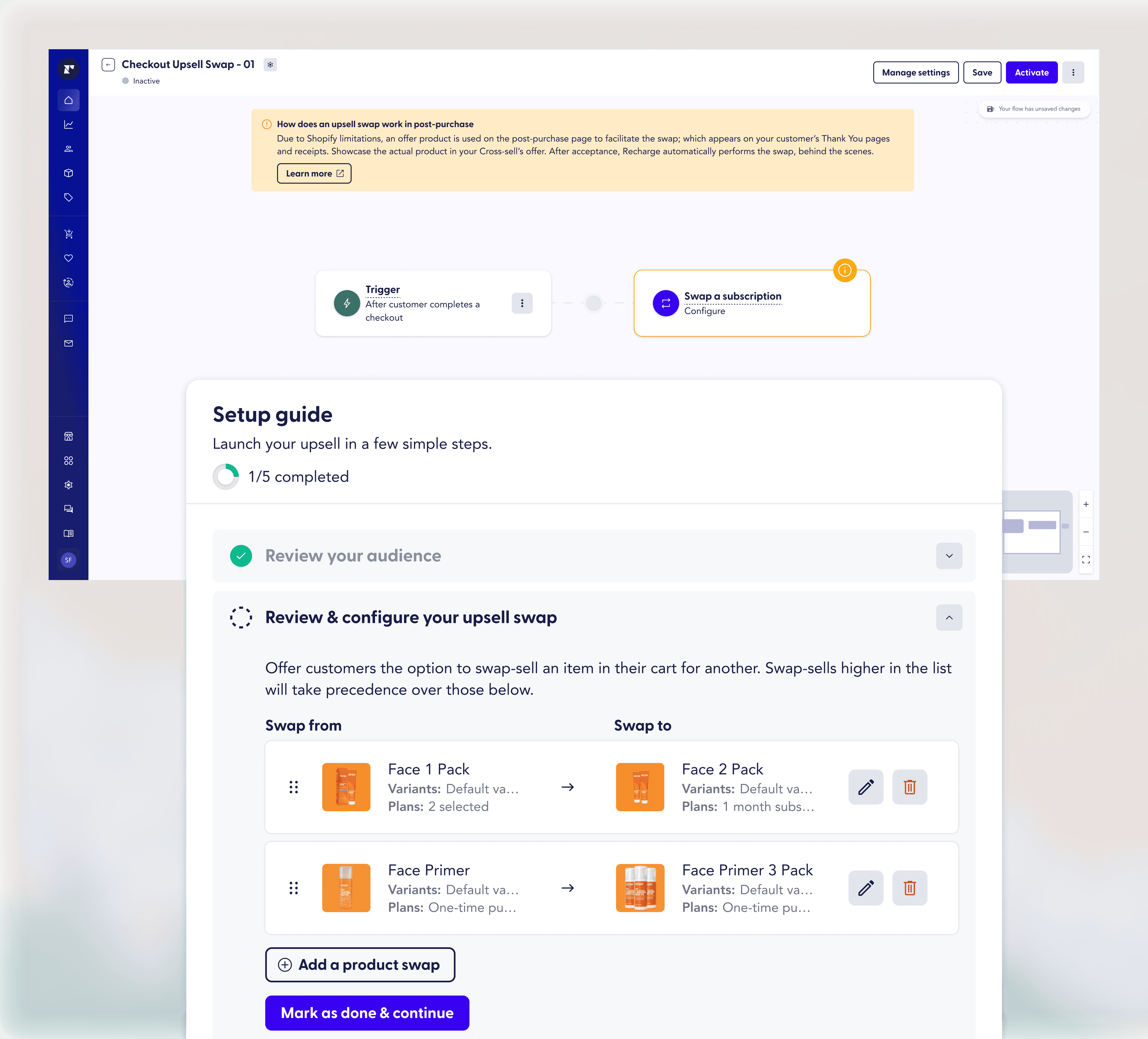
Step-by-step wizard
The canvas builder is now replaced with a guided wizard. Each step is supported by a status, and context that require merchants to stop, read, and interact. This introduces a level of guidance and positive friction that prevents "flying through" the setup.
Steps are housed in cards that expand one at a time, with smart defaults pre-filled to reduce cognitive load. The emphasis is on reading and understanding, rather than figuring out what needs to be set up
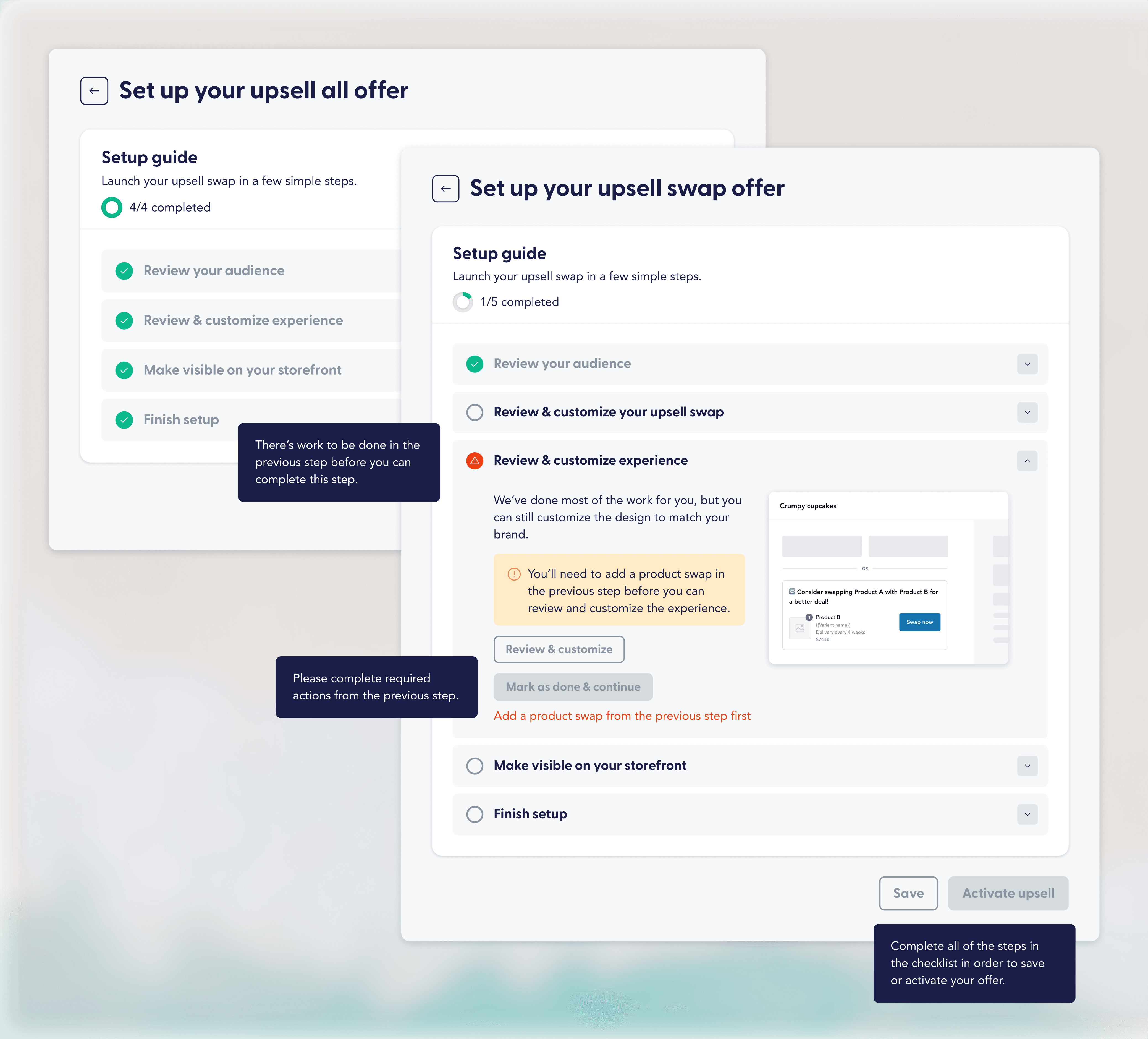
Guardrail based experience
Steps that have dependencies, guide merchants accordingly. Intentional use of copy, tooltips, banners, and validation states create that set of guardrails that informs merchants of the required actions that need to be taken before proceeding.
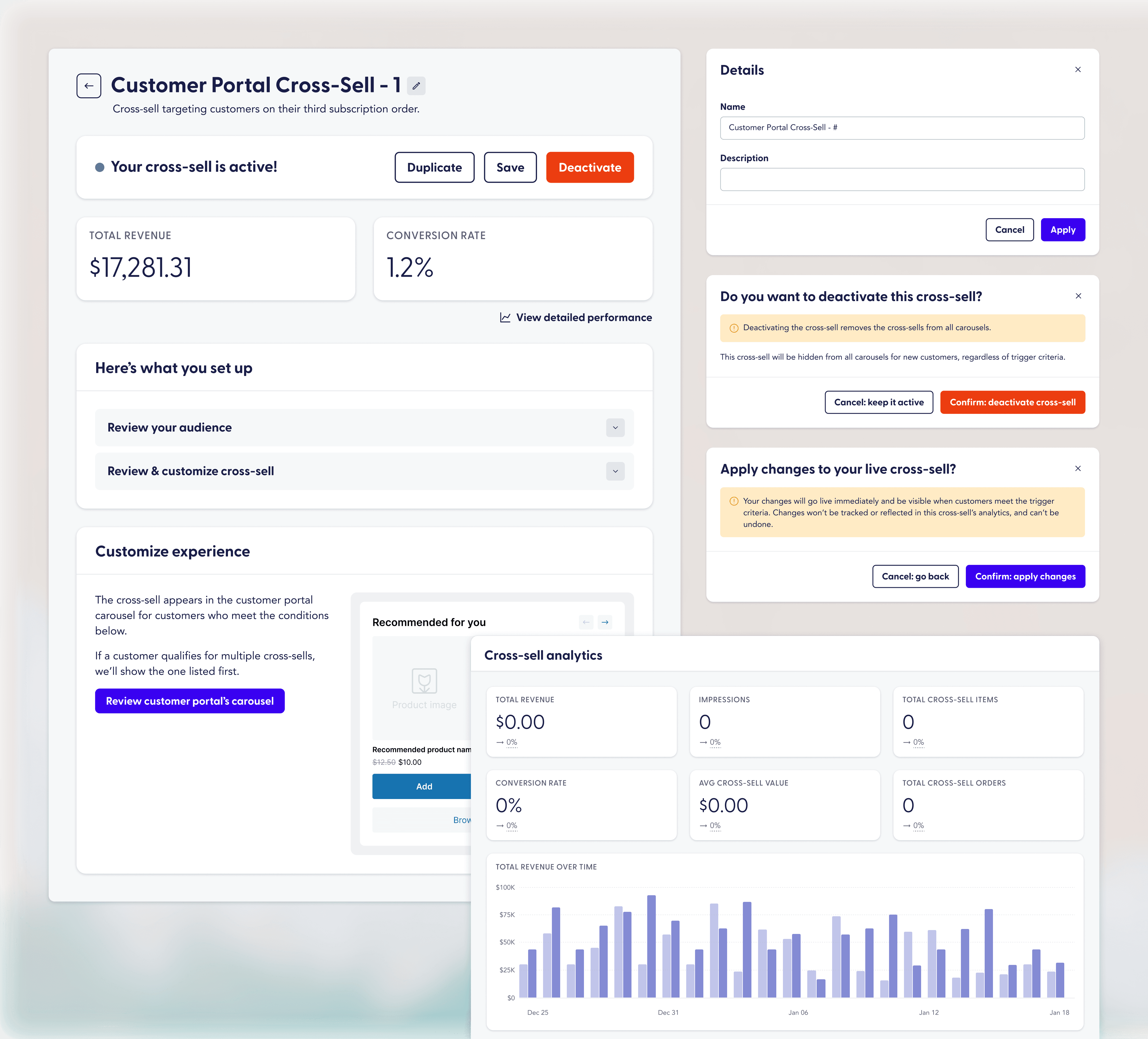
Smart overviews
From squint metrics, to overall flow configurations, the active state is designed to provide just the right amount of information required to help merchants assess performance at a glance.
How did the new pattern perform?
Let's look at some data
To test the efficacy, I compared how the new pattern performed against the canvas builder. By referencing sessions from FullStory, during a consistent time window (with similar sessions) for both patterns, we were able to get a clear understanding of the benefits of the new pattern.
Session details
Upsell All
Guided wizard: 156 sessions from Aug - Dec
Canvas builder: 134 sessions from Apr - Aug
Cross-Sell
Guided wizard: 98 sessions from Sep - Dec
Canvas builder: 102 sessions from Jun - Sep
Subscription widget
Guided wizard: 19 sessions from Nov - Dec
Canvas builder: 26 sessions from Oct - Nov
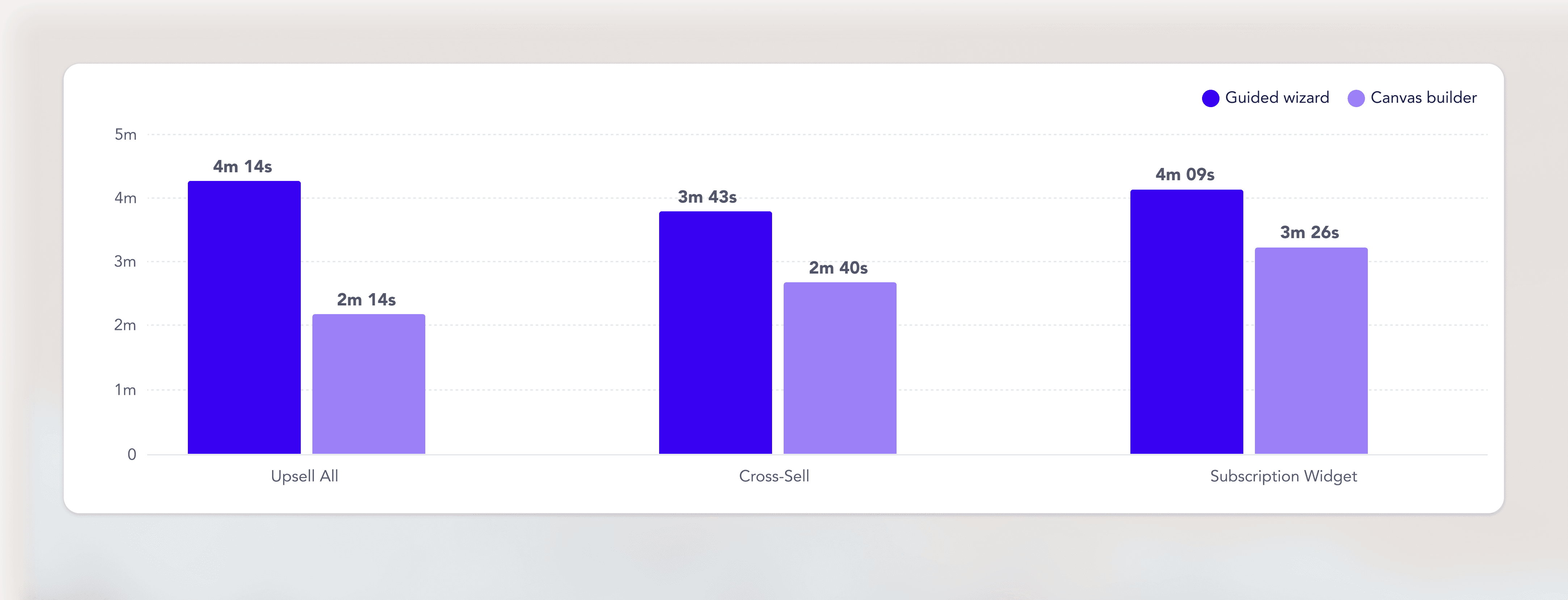
Time to convert: Slower by design
Merchants take more time to understand each step, which correlates with higher retention and greater stickiness, even though it increased the overall time to convert.
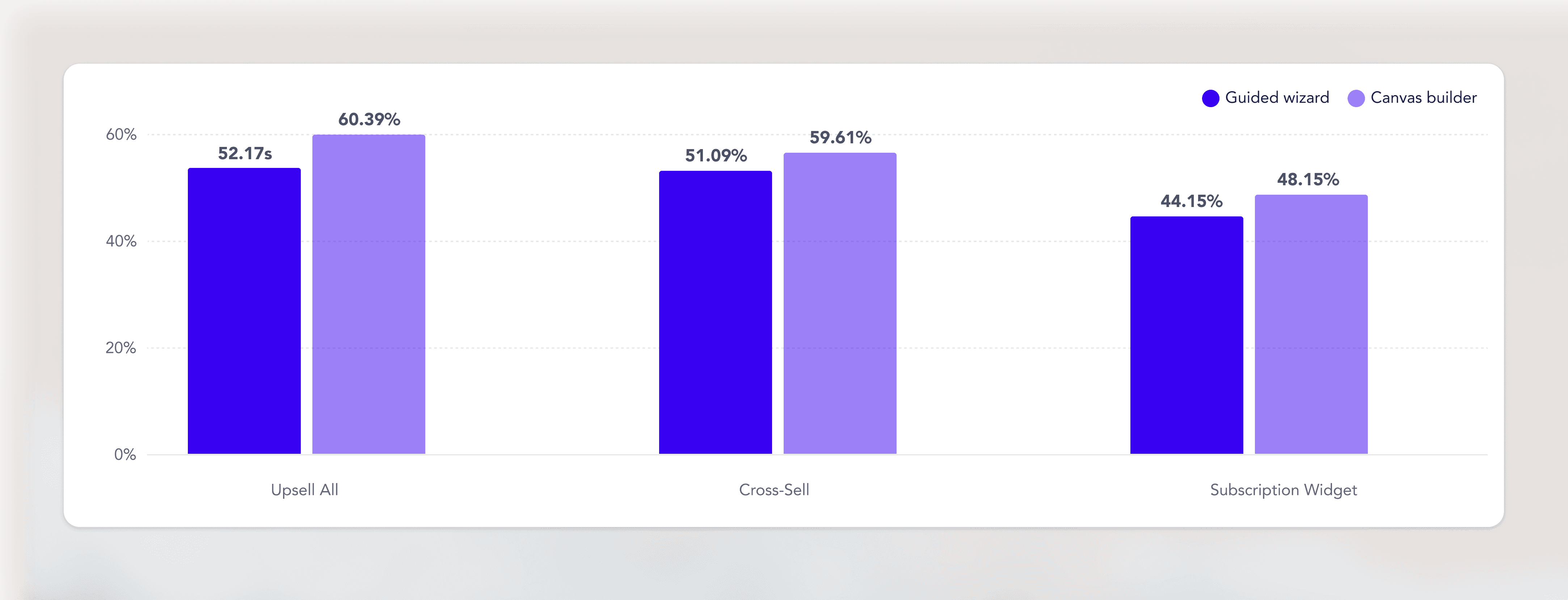
Activation rate: A new paradigm, an expected outcome
The guided wizard introduces a learning curve, that results in an expected drop in activation rates when compare to the traditional and familiar canvas builder (that merchants would 'fly-through'). Conversion rate should catch up, as the pattern gets familiar with merchants.
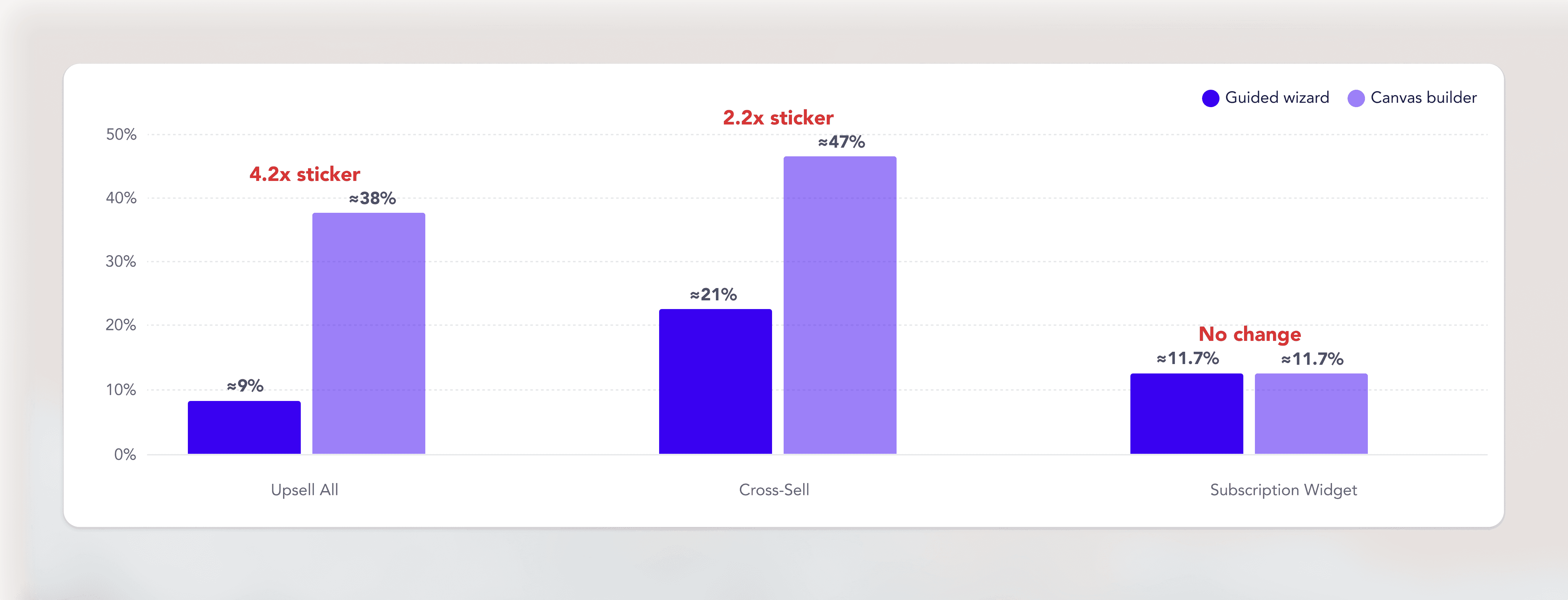
Same-session deactivation: The headline result!
This is where the guided wizard earns its place. Same-session deactivation collapsed on the two offerings with enough sample size to read, and held flat on the third.
Conclusion
The canvas builder may secure slightly higher activation rates at first, but the guided wizard consistently proves to be the engine for long-term retention, 2× to 4× stickier while increasing merchant knowledge. This performance establishes the guided wizard as the default pattern for activating flow experiences.
We're now expanding the guided wizard to include advanced actions such as A/B tests and Conditional branching, and adopting it across all Recharge offerings.
Let's collaborate
Got something cooking? Whether it’s just a sketch or fully scoped, I’m happy to help.
Shoot me a note: zaidalirasool@gmail.com
Zaidali Rasool, Rhizhome (C) 2026